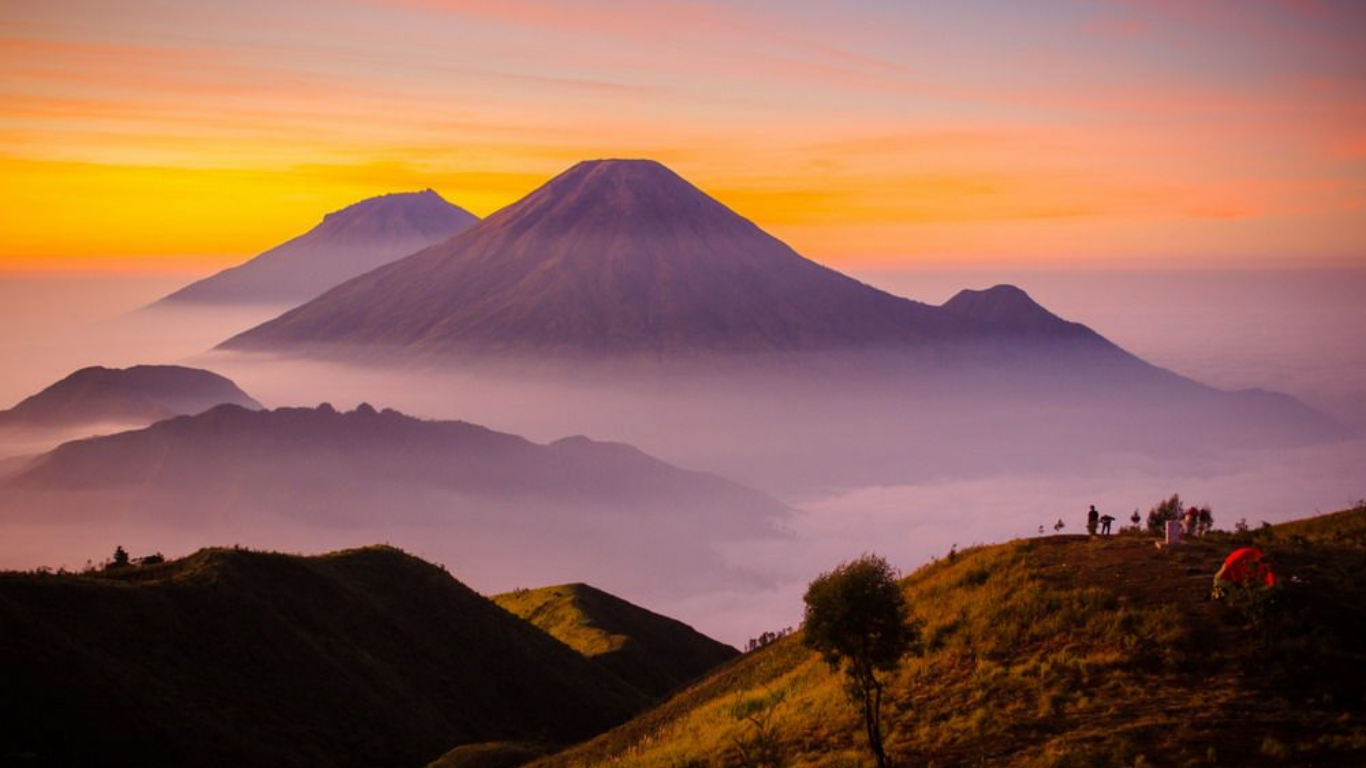
Mount Rinjani is not a mountain you simply visit it is a mountain you earn. Rising to 3,726 meters above sea level, it stands as Indonesia’s second highest volcano and one of the most demanding trekking challenges in Southeast Asia. The climb is not defined solely by elevation or distance, but by the discipline, patience, and resilience required with every step upward. For many travelers, reaching the summit of Mount Rinjani is less about standing on a peak and more about testing personal limits, confronting physical exhaustion, and uncovering a quiet strength that only reveals itself under pressure.
This guide is written for those who seek more than surface level descriptions or quick travel tips. If you are preparing for the ultimate Rinjani trekking summit journey, this complete guide is designed to help you understand the experience in its entirety physically, mentally, and emotionally so you arrive informed, prepared, and fully aware of what truly awaits you on Mount Rinjani.
The summit of Mount Rinjani is legendary not because it is easy, but because it is brutally honest. Every step upward forces you to confront your stamina, your patience, and your mindset. Unlike many popular hiking destinations that feel curated or overly accessible, Rinjani remains raw and uncompromising.
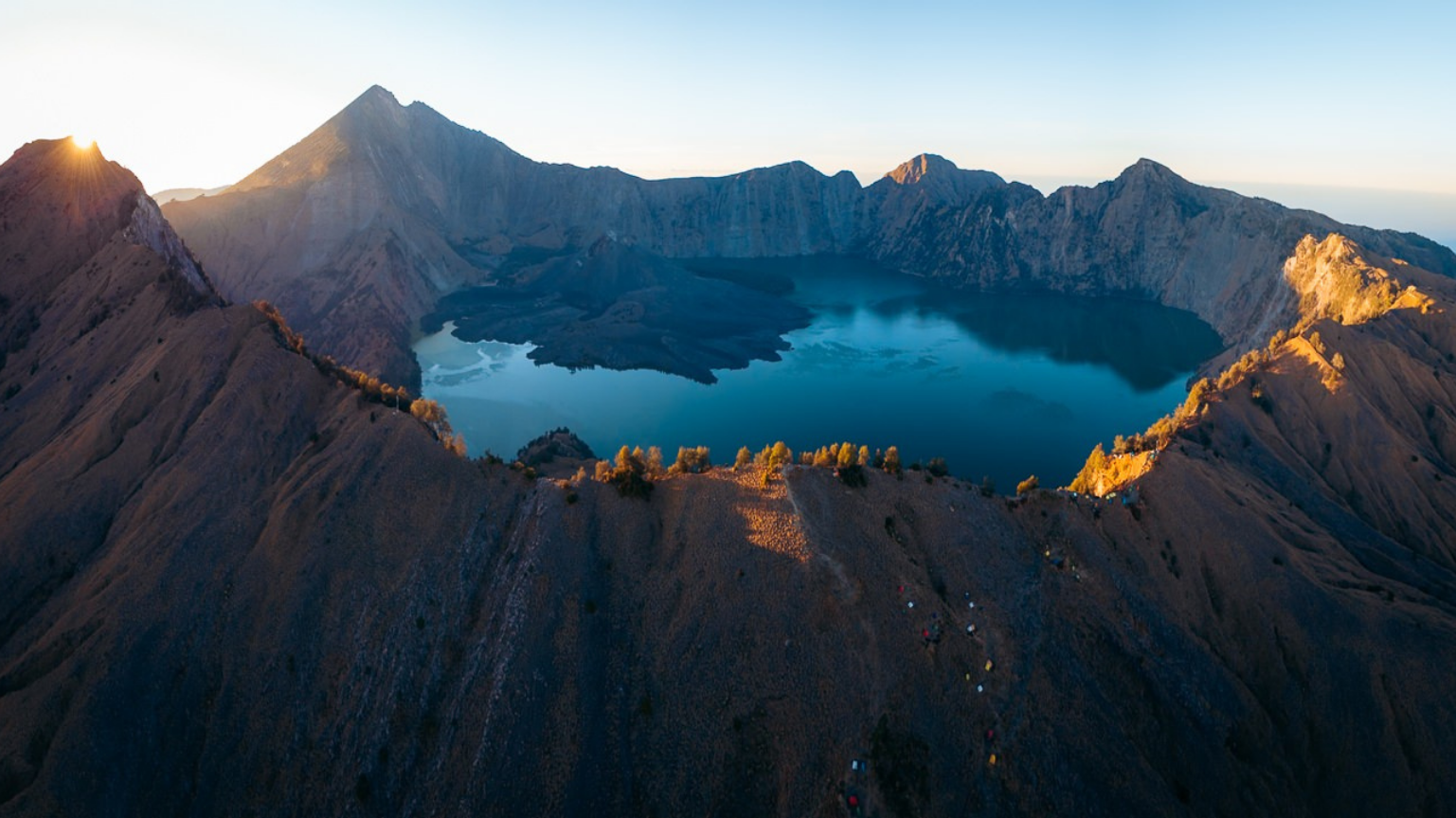
What makes the Rinjani summit experience unique is the contrast. One moment, you struggle in darkness against steep volcanic sand, your breath visible in the cold air. The next, you stand above the clouds, watching sunrise illuminate Lombok Island, the Segara Anak crater lake far below, and Mount Agung rising in the distance across the sea in Bali. That emotional contrast is what stays with trekkers long after they leave Lombok.
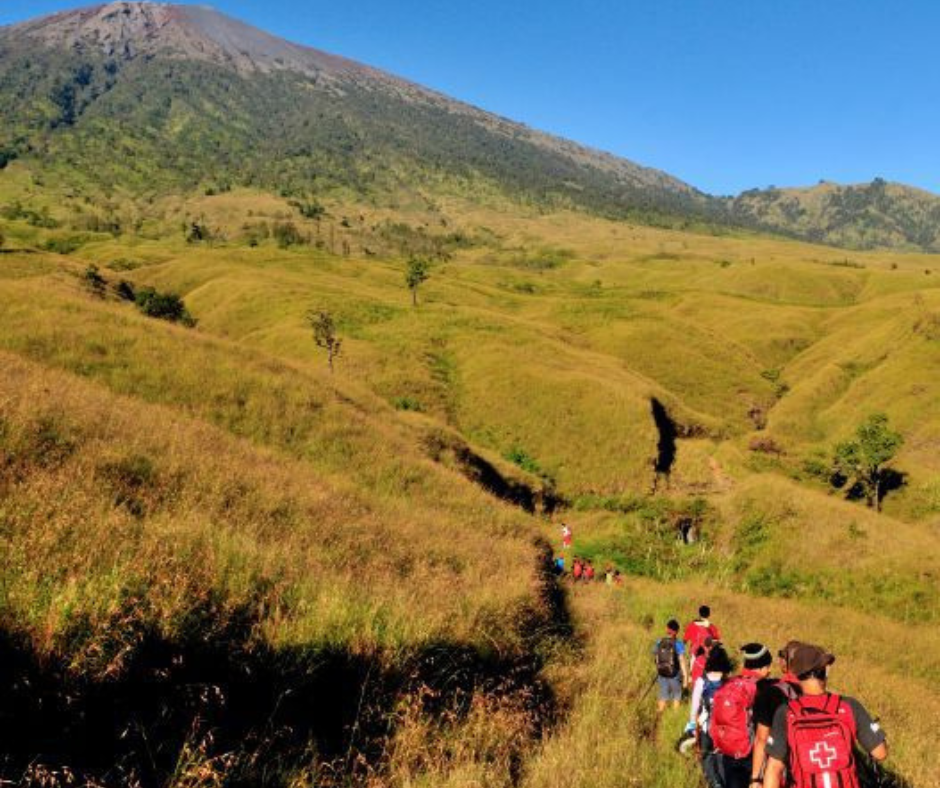
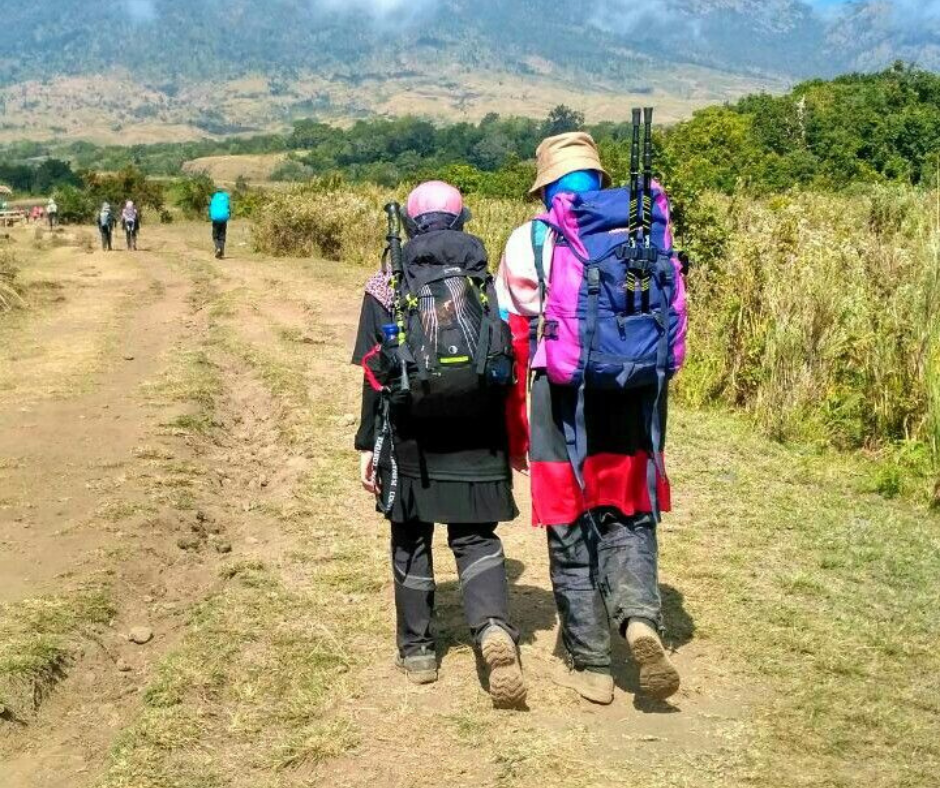
Most summit treks begin from Sembalun Village, located on the eastern side of Mount Rinjani. Unlike the forested Senaru route, Sembalun opens with wide savannah landscapes that may look deceptively gentle. However, this openness also means full exposure to sun, wind, and altitude.
As you ascend, the environment gradually changes. Trees become scarce, grasslands dominate the horizon, and the mountain begins to reveal its true scale. By the time you reach the Sembalun Crater Rim, you are already standing higher than most mountains in Indonesia yet the summit still towers above you, silent and imposing.
This is where anticipation builds. From the crater rim, the summit looks close, but every experienced guide knows the truth: the hardest part is still ahead.
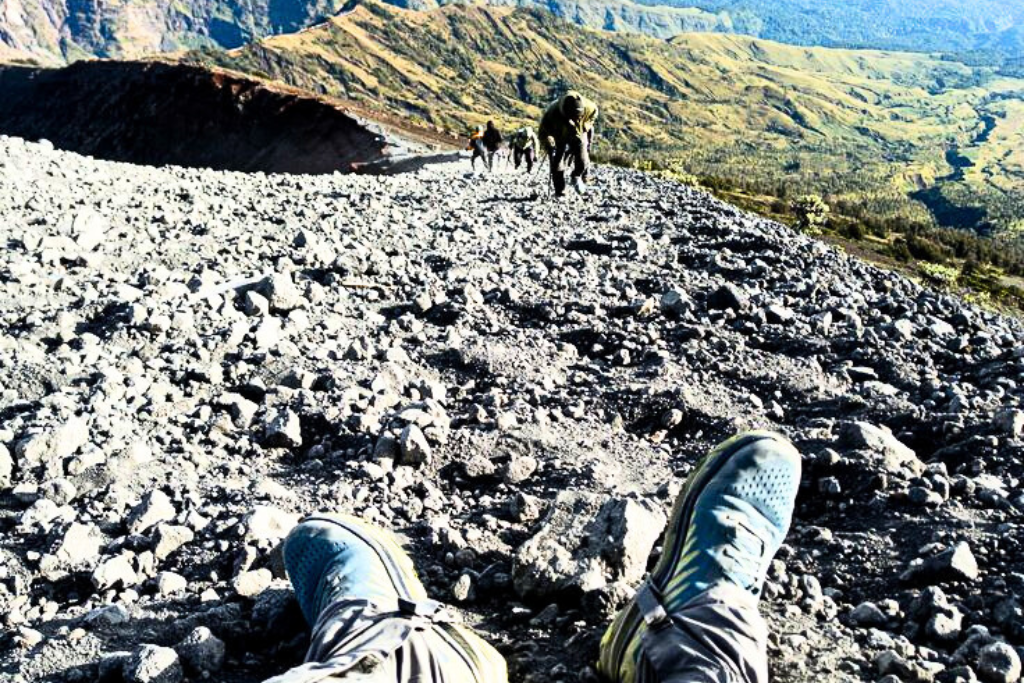
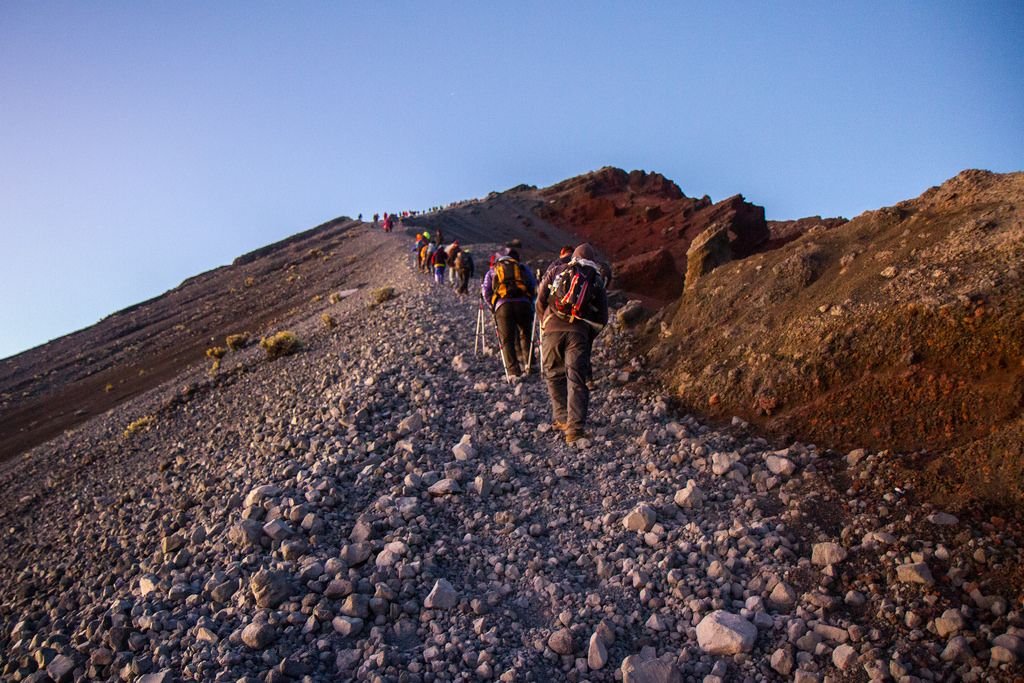
The summit attack is the defining moment of the entire Mount Rinjani trek. It usually begins between 2:00 and 3:00 AM, long before sunrise. Darkness surrounds you, broken only by headlamps moving slowly up the slope like a line of stars.
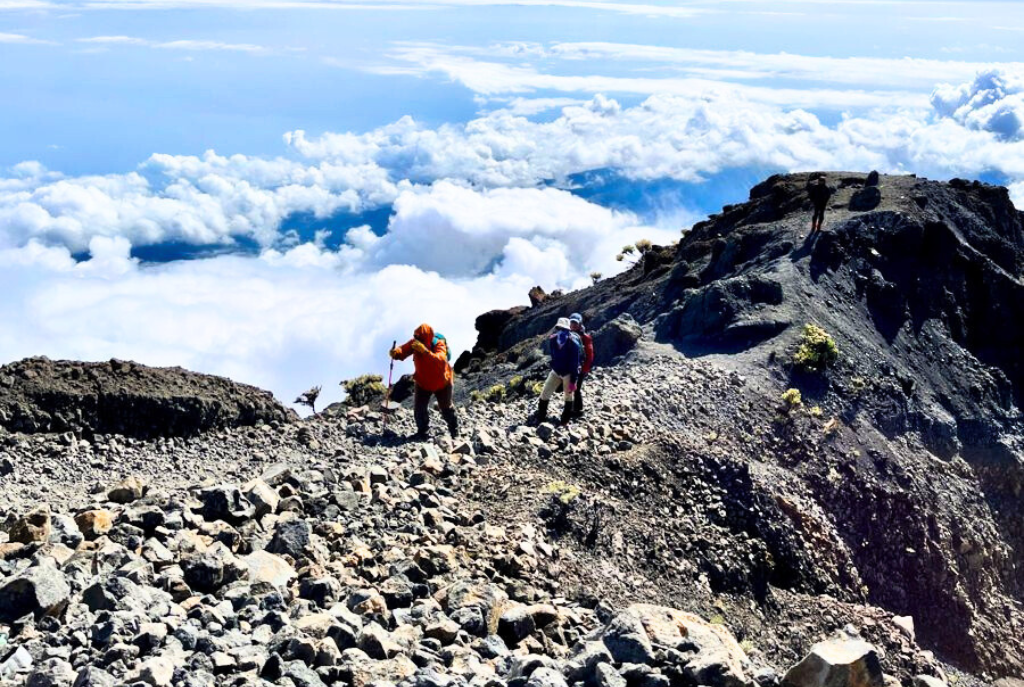
The terrain changes dramatically. The path becomes steep, narrow, and covered in loose volcanic sand. For every two steps forward, you may slide one step back. Progress feels painfully slow, and time seems to stretch endlessly. This is where many trekkers struggle not because they are unfit, but because the mountain demands mental endurance.
Breathing becomes heavier as altitude increases. The cold bites through gloves and jackets. Muscles ache from the constant effort. Yet despite all of this, guides maintain a steady pace, reminding trekkers that slow progress is still progress. On Rinjani, rushing is the enemy.
One of the biggest misconceptions about Mount Rinjani is that strength alone guarantees success. In reality, mental resilience is far more important. The summit does not reward ego; it rewards consistency and humility.
Many trekkers reach a point where doubt creeps in. Thoughts like “Why am I doing this?” or “Maybe I should turn back” are common. This is completely normal. Those who reach the summit are not the ones who never doubt—but the ones who keep moving despite it.
Experienced guides often say that the summit is reached step by step, breath by breath. Accepting discomfort, rather than fighting it, makes the climb manageable. This mental shift often becomes one of the most valuable lessons trekkers take home from Rinjani.
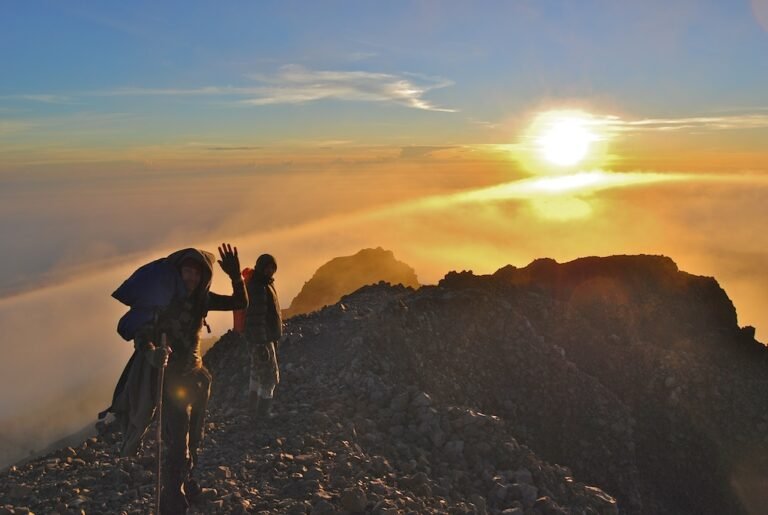
As dawn approaches, the sky begins to soften. The darkness slowly fades, revealing the vastness of the landscape around you. When you finally step onto the summit of Mount Rinjani, exhaustion gives way to something deeper—silence, awe, and disbelief.
From the summit, Lombok unfolds in every direction. Segara Anak glows far below like a hidden world. The curvature of the earth feels visible. On clear days, Mount Agung stands proudly across the sea, reminding you how far you have climbed.
For many, this moment is emotional. Some cry. Some sit quietly. Others simply stare, unable to process the scale of what they have achieved. The summit is not loud or dramatic—it is peaceful, humbling, and deeply personal.
The Rinjani summit experience begins long before you arrive in Lombok. Physical preparation plays a crucial role in determining how your body responds to long ascents, altitude, and fatigue.
Regular cardio training, stair climbing, and hiking with a backpack significantly improve endurance. Strengthening legs and core helps stabilize movement on unstable volcanic terrain. However, even the best training cannot fully prepare you for altitude—this is why pacing and hydration during the trek are essential.
Equally important is proper gear. Cold temperatures at high altitude are often underestimated. Thermal layers, windproof jackets, gloves, and proper footwear are not optional—they are survival tools. Many summit attempts fail simply because trekkers are underdressed or poorly equipped.
Trekking Mount Rinjani is not allowed without licensed local guides, and for good reason. These guides know the mountain intimately—its weather patterns, its dangers, and its rhythms. More than navigators, they are motivators, protectors, and storytellers.
Local guides understand when to push forward and when to stop. They read body language, breathing patterns, and fatigue levels. In many cases, they are the difference between a safe, successful summit and a dangerous situation.
Choosing a responsible trekking operator not only improves your experience but also supports local communities who depend on sustainable tourism around Mount Rinjani.
The honest answer is this: Mount Rinjani is not for everyone. It is cold, physically demanding, and mentally exhausting. Comfort is limited. Sleep is short. The summit push is hard. But for those who are willing to prepare, respect the mountain, and embrace the challenge, the Rinjani summit experience offers something rare in modern travel authentic struggle followed by genuine reward. You don’t just return with photos. You return with confidence, perspective, and a deeper understanding of your own limits.
Mount Rinjani does not impress you easily. It strips away expectations and replaces them with reality. Every step toward the summit teaches patience. Every moment of exhaustion builds resilience. And when you finally stand at the top, you realize the journey mattered more than the destination. That is why the Ultimate Rinjani Trekking Summit Experience is not just a hike it is a transformation
If the summit of Mount Rinjani has been calling you, perhaps this is the moment to answer it. With the right preparation, guidance, and respect for the mountain, the journey becomes more than a climb it becomes a defining experience. When you are ready to take that step, Majestic Rinjani is here to help you experience Mount Rinjani the way it deserves to be experienced.